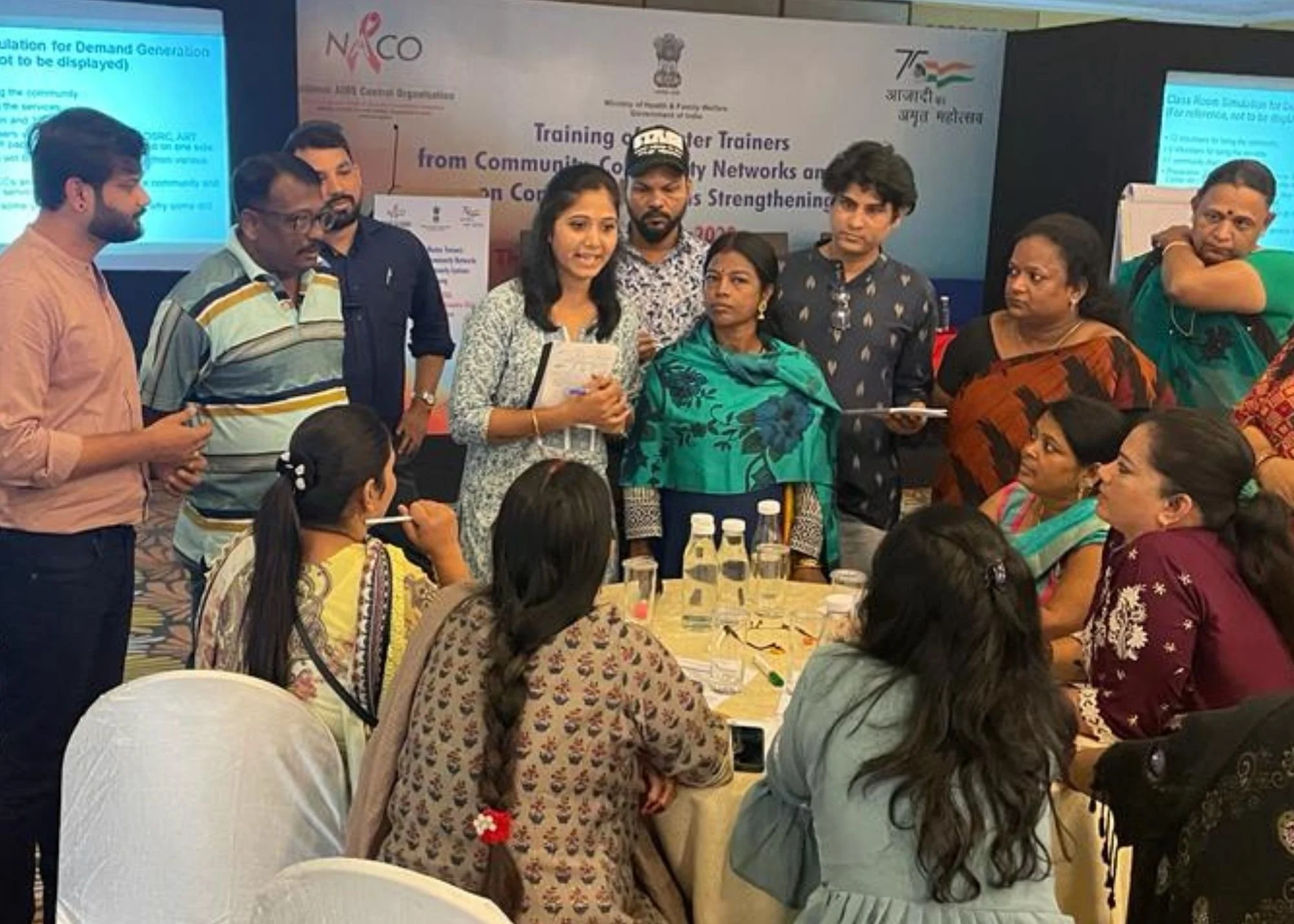
In India, more than 2.4 million people are living with HIV. Through individualized and integrated models of care, the ACCELERATE project shifted the focus of the HIV response from a disease-centered approach to one that puts people first.
Project ACCELERATE


Under the guidance of the U.S. President's Emergency Plan for AIDS Relief (PEPFAR) and the U.S. Agency for International Development (USAID), and in collaboration with the National AIDS Control Organization, the ACCELERATE program provides technical assistance to the national, state, and district HIV/AIDS programs in India. The project closed in 2025.
ACCELERATE supported the national program to address gaps in current programming across the HIV care continuum—from testing to prevention to treatment. The overall focus of the program was all vulnerable populations (and their partners, spouses, and networks) with a special emphasis on key populations namely female sex workers, men who have sex with men, transgender people, and people who inject drugs who bear a disproportionate HIV burden.
The program focused on high-burden PEPFAR cluster districts in the states of Maharashtra (Thane, Pune) and Telangana (Hyderabad, Rangareddy, Mahbubnagar, Karimnagar, Nalgonda). ACCELERATE implemented Orphans and Vulnerable Children activities in all 33 PEPFAR cluster districts in India across the states of Maharashtra, Andhra Pradesh, Telangana, Nagaland, Manipur, and Mizoram.
Additionally, the project provided "above-site" technical assistance to enhance the HIV cascade in 11 additional districts across Telangana and Maharashtra, as part of the October 22 to October 23 Regional Operation Plan: Kolhapur, Satara, Sangli, Ahmednagar, Nashik, Raigad, and Solapur for Maharashtra and Khammam, Nizamabad, Sangareddy, and Warangal (Urban) for Telangana.
A Person-Centered Approach
Since 2019, the project team has implemented integrated care models using non-HIV services as entry points to HIV services. This includes Adolescent Friendly Health Centres for youth affected by HIV, Mitr clinics for the transgender community, TAAL+ clinic and e-pharmacy for people living with HIV, and Safe Zindagi for online outreach.
Program Implementation Resources
For individuals and organizations seeking to carry out evidence-based HIV programming in India or similar contexts, ACCELERATE offers a collection of resources for planning, implementation, and advocacy.
The Team
The ACCELERATE project was funded through PEPFAR and USAID. The prime recipient is the Johns Hopkins University School of Medicine and sub-awardees include YRGCARE, the Fenway Institute, and Blue Lotus Advisory. Our national team was based in New Delhi and Baltimore with hundreds of staff members in India leading efforts at the state and district levels.