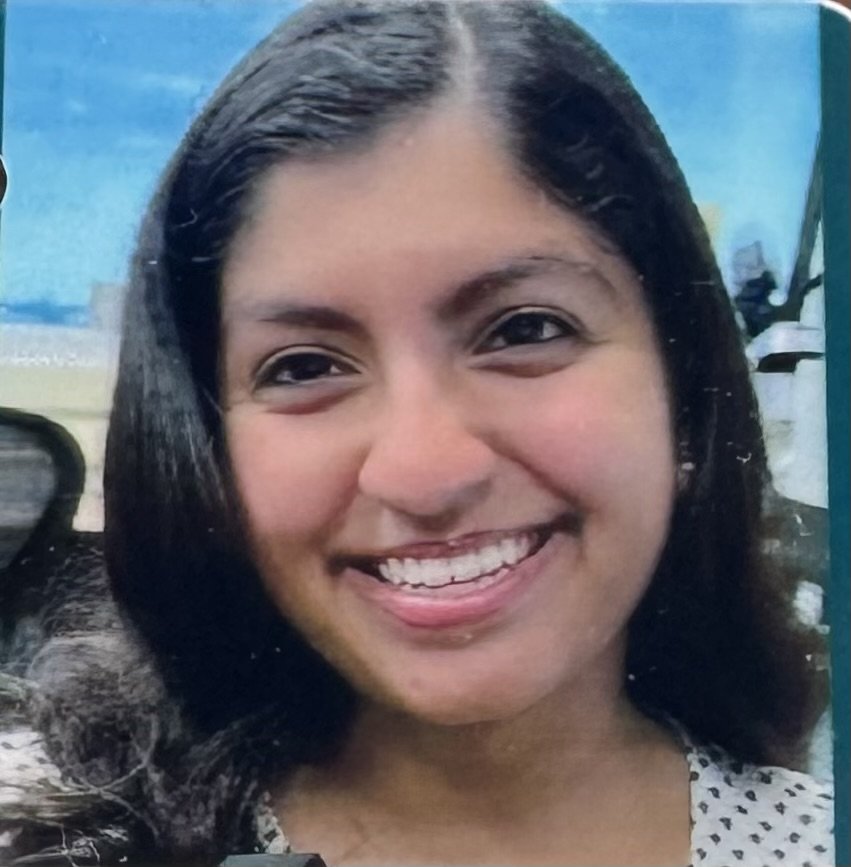
School: Johns Hopkins Bloomberg School of Public Health
Major: MSPH in Global Disease Epidemiology & Control (GDEC)
Tell us about yourself.
I was born and raised in Northern Virginia. Prior to arriving at JHBSPH for my graduate studies, I completed my undergraduate degree with a Bachelor of Arts as a Biology major and Psychology minor at the University of Virginia (UVA) in Charlottesville, Virginia. During my time at UVA, I had the opportunity to do a few internships which shaped my interests towards public health and specifically conducting research around prominent health conditions disproportionately affecting
marginalized populations. My first key public health experience conditions disproportionately affecting marginalized populations.My first key public health experience was with the Lutheran Social Services of the National Capital Area, where I served as a health intern for Afghan and Syrian refugee families during the COVID-19 pandemic; forming a connection with the families I was fortunate to work with through helping them build health stability was a pivotal experience for me to observe what health as a phenomenon meant and looked like to others from various backgrounds, and how accessibility (or lack thereof) was a key barrier to achieving an adequate and equitable quality of life. In the subsequent two summers, I participated in the NIH’s Summer Internship Program (SIP) where I interned at the National Cancer Institute (NCI) and in the National Institute of Diabetes and Digestive and Kidney Diseases (NIDDK), focusing on socioeconomically marginalized populations respectively related to African American prostate cancer cell lines and hepatocellular carcinoma risk prediction models. The study populations in each of these internships supplementing the quantitative aspects of work I conducted is what sparked my desire towards public health, given the interdisciplinary nature of the field which connects socioenvironmental determinants towards health.
Can you describe the project you’re working on what your role/responsibilities will be?
My practicum is basedin Pune, India. The research project I am working on is built off of the HATHI study (Hybrid trial for Alcohol reduction among people with TB and HIV in India) which is a two-arm hybrid Type I implementation-effectiveness randomized control trial consisting of a multi-session, behavioral intervention using Cognitive Behavioral and Motivational Enhancement Therapy targeted towards patients that have TB, HIV, or TB-HIV coinfection and are engaging in unhealthy alcohol use (UAU). My work focuses on most of these major elements, but with the added component of mental health, specifically Depression and Anxiety symptoms (DAS); for my study, we seek to understand 1) the association between UAU and DAS, 2) prevalence of DAS at baseline (stratified among participants by GAD-7 and PHQ-8 cutoffs which are respectively anxiety and depression patient questionnaires), and 3) the clinical and social predictors of DAS among PWTB-UAU. My responsibilities include conducting a literature review around my topic, performing data cleaning and management for our dataset we are working with, conducting data analysis (specifically, logistic regression models and related model checking mechanisms), and writing a manuscript about the project with the team.
What do you see as the greatest opportunities or challenges for working on this project?
The team is incredibly warm, collaborative, and dynamic with regards to welcoming student interns, teaching them the relevant content and materials at a good pace, and providing them with tasks that both build on students’ previous skills and help sharpen new skills. Being surrounded by great people is certainly a key opportunity to being able to learn a lot for my project regarding its content and the responsibilities I have. Another opportunity I was and am looking forward to is becoming more knowledgeable about TB and HIV in general, as these are not health conditions I have explored in depth in my prior research and internship experiences; after arriving in Pune and discussing what my project would really consist of with my team in the first week, I was most interested in how broad my project was going to be regarding the multimorbidity I was assessing (layering in mental health conditions onto our TB and/or HIV patient population, who experience varying degrees of alcohol use). My overarching public health interests are related to studying underlying social factors that shape treatment trajectories for patients, and what implications that poses for countries’ systemic health infrastructure, so this project supports all those areas I am keen to learn about.
What do you hope to learn from working on this project?
I hope to gain a greater understanding of the complexities of TB care infrastructure, and more specifically how patients’ treatment trajectories are shaped by their degree of UAU and DAS, in Pune, and how our work can be translated to the implementation and policy space both for TB care infrastructure in Pune and neighboring areas in India.
What have you learned so far?
Through my literature review and initial data management I have done, I have been able to learn a lot about the intricacies of how alcohol use significantly shapes the TB and HIV disease and treatment trajectories that populations experience in India, and how that relates to various socio-health aspects (stigmatization of TB, HIV, and alcohol consumption leads to a lack of community support and has created the need for tailored interventions focusing on mental health and alcohol consumption in routine TB screenings and care).
What advice would you give other students interested in this program?
My main advice would be to thoroughly enjoy the experience by forming connections with the wonderful staff; as I mentioned above, the people here are very warm, personable, and open to teaching students. Taking advantage of the opportunity to build lasting connections will of course broaden the work and scope of learning a student can experience here but can also lead to great conversations during their time in and after leaving Pune. Regarding academic or logistical advice, I would suggest that building an organized set of documents during the first week of the practicum, both for practicum work-related materials and for Capstone materials (if the student will be using this practicum for their Capstone) is a great way to help a student feel prepared, and also good materials for them to have as they go through their 8 weeks here where they can easily log their progress, write what tasks they do each week, and take work-related notes. Apart from that, I would suggest that if a student has never been to Pune or to India before, reading online or asking relevant sources what they should know about the culture here (passport/visa documents, food, transportation, housing, people, holidays, landmarks, etc.) can be helpful to know so they feel safe and prepared when they come.
What are your next steps after the project?
I sent the final and most updated version of my manuscript to my primary preceptor in the Pune team back in early April, so it is in the process of being reviewed before submitting to a journal for publication. These are the final aspects of my process and collaboration with the Pune team on this project.